

Quick answer
June and July are the strongest months, when operators from Reykjavík Old Harbor report sighting rates above 90 percent and daylight runs almost around the clock. The harbor itself is open 00:00–23:59 daily with free entry, so timing depends on departures, not gates. Winter sailings continue, but shorter days and North Atlantic swell cut both frequency and comfort.
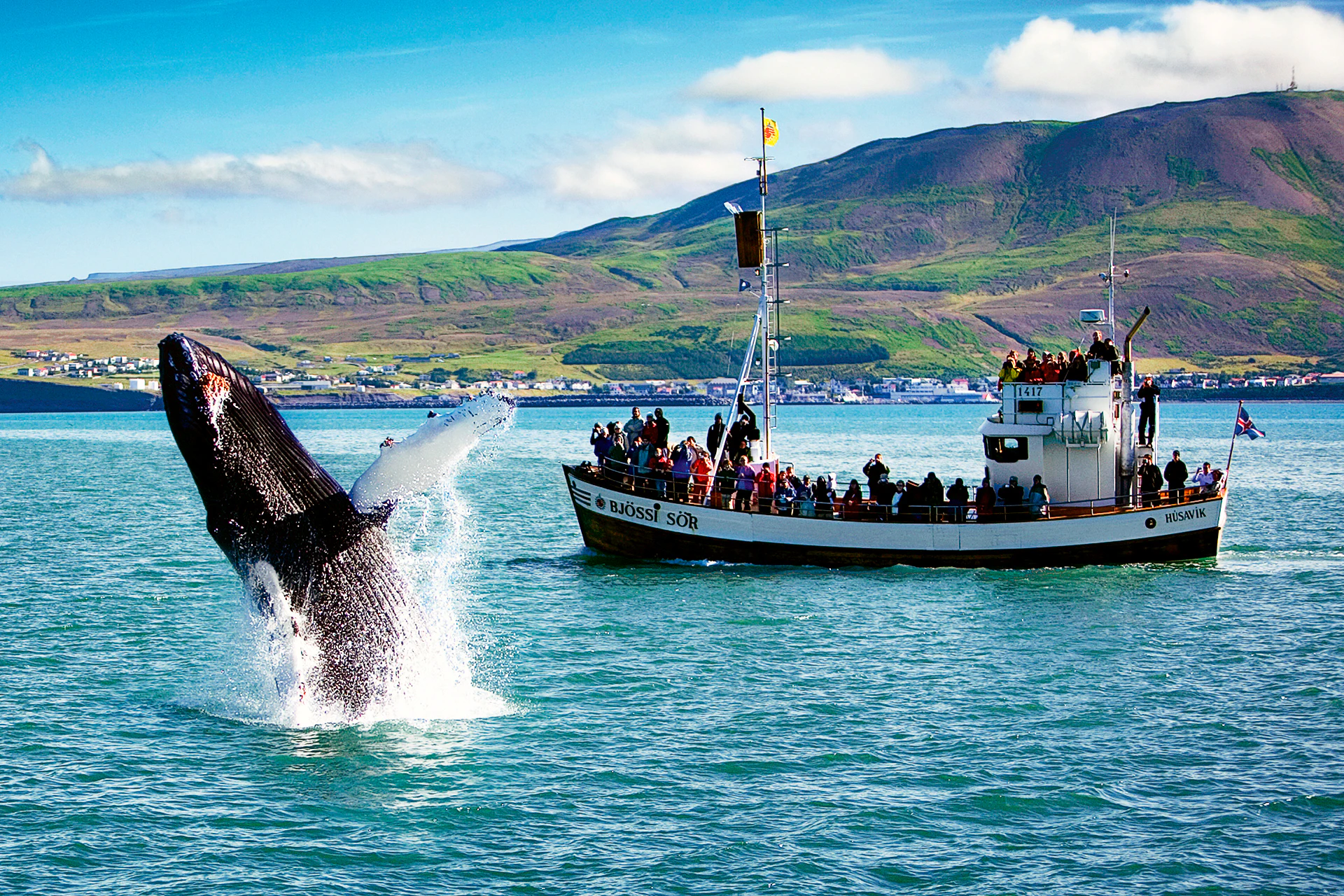
Faxaflói Bay is shallow, silty and fed by glacial meltwater, which sounds unpromising until you learn it produces one of the densest sand eel and capelin nurseries in the North Atlantic. That food column is the entire reason a city of 140,000 people has a whale fleet tied up two minutes from its main shopping street. Anyone asking what month is best for whale watching in iceland is really asking when the bait fish are thickest, because the minke whales, humpbacks, white-beaked dolphins and harbour porpoises simply follow them. The biological calendar is straightforward. Capelin move inshore as the water warms, the plankton bloom peaks in late spring, and the large baleen whales arrive behind them. Humpbacks, once rare in the bay, have become a reliable summer presence over the past two decades, and orca pods occasionally push north from the Snæfellsnes herring grounds. By October the bait has dispersed, the minkes head south, and the boats shift their attention to the resident dolphins and porpoises that overwinter here. A Reykjavík whale watching tour in February is not a failed summer tour; it is a different trip with different animals and a colder deck. Sea state matters as much as species. Faxaflói is sheltered by the Reykjanes peninsula to the south and Snæfellsnes to the north, so summer mornings are frequently glassy, which makes spotting blows at distance far easier. Autumn low-pressure systems arriving off Greenland can cancel sailings outright. Departures leave from Reykjavík Old Harbor at Geirsgata, 101 Reykjavík, a working dock shared with the fishing fleet, and the same weather that keeps trawlers alongside keeps the passenger boats there too. What to do with all this depends on the traveller. Those with one fixed week in Iceland should treat June and July as the safe bet and book early, since the same window carries the puffin colonies on Akurey and Lundey and the boats fill accordingly. Travellers with flexible dates gain more from watching the forecast than the calendar. Anyone visiting outside summer should read the answer to what month is best for whale watching in iceland as a probability, not a promise: sightings still happen in November, they are just less certain. Most operators, including Elding, issue a return voucher when nothing is seen, which quietly turns a marginal month into a second chance.
“A February sailing is not a failed summer tour; it is a different trip with different animals and a colder deck.”
What Month Is Best for Whale Watching in Iceland? Peak Seasonal Insights
The period from June through August serves as the optimal window for whale watching in Iceland, providing maximum daylight and high levels of marine activity. During these months, migratory species such as minke whales, white-beaked dolphins, and humpback whales are most frequently sighted in Faxaflói Bay.
June–August
High volume of visitorsMild, 10°C to 15°C; long daylight
Peak season offers the highest probability of sightings and calmer sea conditions.
May and September
Moderate visitor numbersCooler, 5°C to 10°C; variable conditions
Shoulder months provide a quieter experience while still maintaining reasonable opportunities to observe local wildlife.
October–April
Lower visitor numbersCold, 0°C to 5°C; limited daylight
Winter tours are subject to weather cancellations and require warmer gear, though orcas are occasionally spotted.
Verdict: The best opportunity for reliable sightings and favorable conditions occurs between June and August, ideally within the 09:00–17:00 arrival window.
What Month Is Best for Whale Watching in Iceland: Operating Hours at the Harbor
The Reykjavík Old Harbor area is accessible to visitors daily, facilitating access to whale watching departures.
| monday | 00:00–23:59 | |
|---|---|---|
| tuesday | 00:00–23:59 | |
| wednesday | 00:00–23:59 | |
| thursday | 00:00–23:59 | |
| friday | 00:00–23:59 | |
| saturday | 00:00–23:59 | |
| sunday | 00:00–23:59 |
Operating hours for the harbor area remain consistent throughout the year.
What Month Is Best for Whale Watching in Iceland: Understanding Harbor Fees and Costs
Access to the Reykjavík Old Harbor public area is free of charge. Whale watching excursions require individual tickets purchased directly from authorized tour operators.
While harbor access is 0 ISK, passengers pay variable rates for boat tours depending on the specific operator selected.
How to Reach Reykjavík Old Harbor for Whale Watching
Reykjavík Old Harbor is located at Geirsgata, 101 Reykjavík, and serves as the primary departure point for whale watching excursions. The harbor area is centrally located and easily accessible by public transport or walking from the city center.
Strætó lines 1, 3, or 6 to Mýrargata stop
Route 41 to Geirsgata
Walk towards the waterfront via Tryggvagata
Essential Checklist for Your Whale Watching Trip
A few preparations in the weeks and hours before departure make the difference between a comfortable sailing and a cold, cut-short one at Reykjavík Old Harbor.
-
Reserve your sailing well in advance — Popular departures fill quickly, especially in summer.
-
Check the operator's sailing status — Weather cancellations are announced at https://elding.is before departure.
-
Pack windproof and waterproof outer layers — Open-deck viewing is cold and wet even in mild weather.
-
Wear closed shoes and warm gloves — Metal decks are slippery and handrails get icy.
-
Take motion sickness tablets beforehand — Faxaflói Bay swell builds fast and tablets need lead time.
-
Bring photo ID and booking confirmation — Operators check names at the harbour desk before boarding.
-
Arrive between 09:00 and 17:00 — This is the best arrival window for peak daylight and wildlife activity.
-
Charge your camera and phone — Sightings are brief and deck charging points are limited.
Check availability
Whale Watching in Reykjavik: Frequently Asked Questions
Everything you need to know about what month is best for whale watching in iceland