

Quick answer
The strongest window runs from April to September, with sailings from Reykjavík Old Harbour available daily between 09:00 and 21:00 and an optimal arrival window of 09:00–17:00, when daylight and sea conditions give the highest probability of sightings. June to August is the reliable core. Winter trips still run, but shorter light and heavier swell reduce the odds.
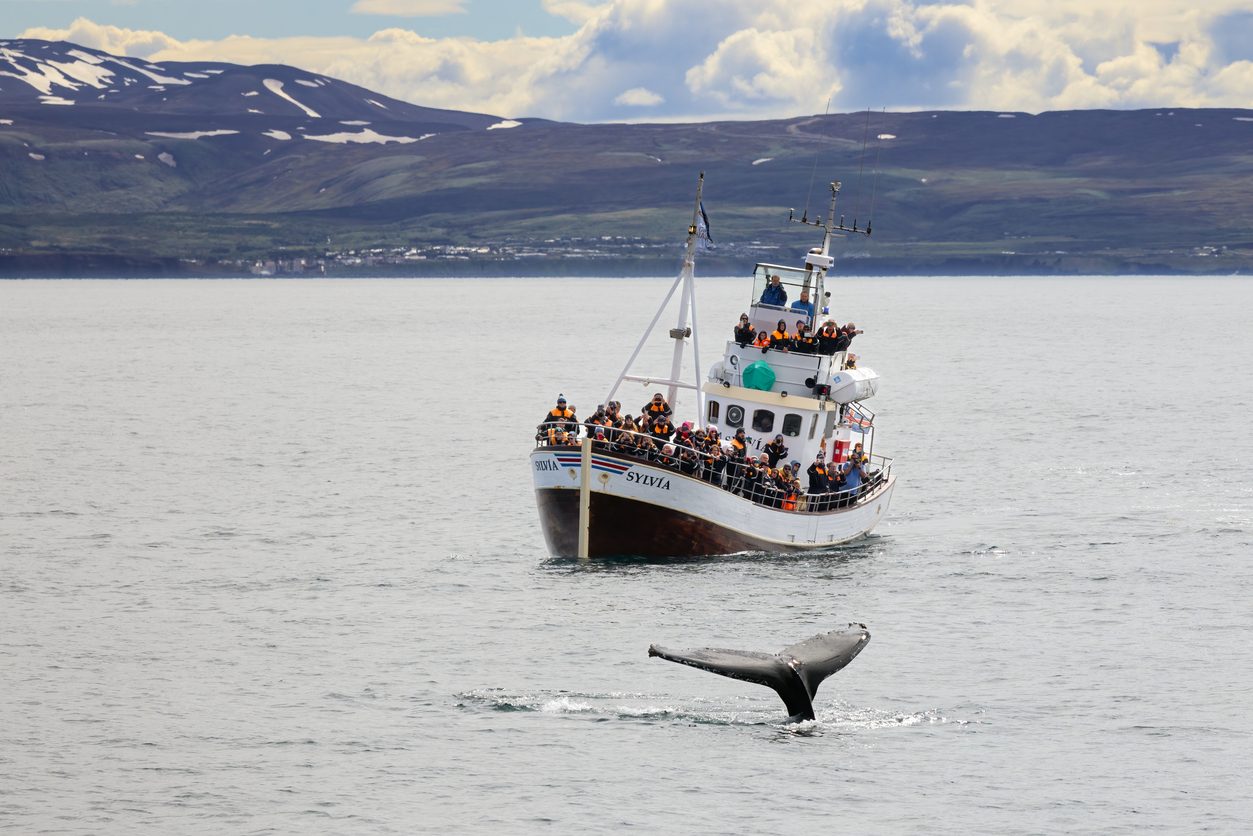
Faxaflói Bay is shallow, cold and unusually productive: nutrient-rich water pushed in from the Denmark Strait feeds dense shoals of sand eel and capelin, and the whales follow the food rather than the calendar. That biological detail explains almost everything about what is the best time to go whale watching in Iceland. The animals are not on a timetable set by tourism. They arrive when the bay is worth feeding in. For most of the year that means a broad summer season. Minke whales are the everyday sighting; humpbacks appear more often as the season deepens, and white-beaked dolphins travel the bay in pods that can number several dozen. Orca sightings are occasional and unpredictable. Harbour porpoises, small and undemonstrative, are easy to miss unless the water is flat. Departures leave from Reykjavík Old Harbour at Geirsgata in 101 Reykjavík, a ten-minute walk from Laugavegur, with Mount Esja on the northern horizon as the boats clear the breakwater. The second variable is light. Iceland's summer nights barely darken, which stretches the usable viewing day well beyond what visitors expect from a Reykjavík whale watching tour elsewhere in the North Atlantic. In December the reverse applies: usable daylight shrinks to a few hours around midday, and the recommended arrival window narrows accordingly. Wind matters more than temperature. A Force 5 blow in July will scatter dorsal fins into whitecaps far more effectively than a still, cold morning in October. Most readers arrive at this question with a fixed set of travel dates and limited flexibility, so the practical use of an Iceland whale watching guide is not choosing the perfect month — it is choosing the right day and the right hour within the days available. Check the marine forecast the evening before. Favour mornings when a front is forecast to build. Build in a spare day if the itinerary allows, because most operators offer a second sailing when a trip produces no sighting. Understanding what is the best time to go whale watching in Iceland ultimately means reading three things together: season, daylight and swell. The dedicated sections below break each down, alongside harbour access, timings and what to bring.
What Is the Best Time to Go Whale Watching in Iceland: Seasonal and Daily Windows
The peak season for whale watching in Iceland occurs from April to September, when migratory species arrive in Faxaflói Bay. For the highest probability of sightings and calm sea conditions, the optimal arrival window is between 09:00 and 17:00.
Summer (June–August)
High volume of visitorsMild, 10°C–15°C. Frequent daylight hours.
This period offers the best chance to see minke whales, white-beaked dolphins, and humpback whales.
Shoulder Season (April–May, Sept–Oct)
Moderate visitor numbersCooler, 3°C–10°C. Variable sea conditions.
Wildlife remains active, and the lower density of boats provides a quieter experience.
Winter (November–March)
Low visitor volumeCold, -2°C–5°C. Potential for rough seas.
Tours depend heavily on weather and daylight availability. Orcas may be spotted during these months.
Daily Windows
Consistent throughout the season—
Visiting between 09:00 and 17:00 ensures optimal daylight and typically calmer sea conditions for sightings.
Verdict: The best time for whale watching is from June to August, arriving within the 09:00–17:00 window to benefit from maximum daylight and favorable sea conditions.
Opening Hours for What Is the Best Time to Go Whale Watching in Iceland Planning
The facility maintains consistent daily operations throughout the week to accommodate visitors planning their whale watching excursions. You may visit the harbour location during the following hours.
| Monday | 09:00–21:00 | |
|---|---|---|
| Tuesday | 09:00–21:00 | |
| Wednesday | 09:00–21:00 | |
| Thursday | 09:00–21:00 | |
| Friday | 09:00–21:00 | |
| Saturday | 09:00–21:00 | |
| Sunday | 09:00–21:00 |
Navigating to Your Tour: What Is the Best Time to Go Whale Watching in Iceland Arrival
Whale watching tours depart from Reykjavík Old Harbour, located at Geirsgata, 101 Reykjavík. The harbor area is centrally positioned and easily accessible by public transport or walking from the city center.
Strætó lines 1, 3, or 6 to Mýrargata
Park at the Old Harbour public lots
Walk from downtown via Geirsgata
Understanding Costs: What Is the Best Time to Go Whale Watching in Iceland Fees
There is no entrance fee to access the Reykjavík Old Harbour. Whale watching costs are determined by the specific tour operator chosen for your excursion.
While harbour access is free, visitors pay a per-person fee for whale watching tours, which varies depending on the provider.
Pre-Visit Checklist for What Is the Best Time to Go Whale Watching in Iceland
A few preparations made in the right order — weeks ahead, the night before, and an hour before departure — decide whether three hours on the Faxaflói swell are comfortable or endured.
-
Reserve your sailing well in advance — Summer departures from Reykjavík Old Harbour fill quickly, and confirmed dates give you room to rebook if weather cancels.
-
Confirm details with the operator directly — Call +3545195000 or check https://elding.is for sailing status, since sea conditions change plans at short notice.
-
Take sea-sickness tablets before boarding — Most remedies need 30 to 60 minutes to work and cannot be taken once the swell starts.
-
Dress in three thin layers — Wind chill offshore runs far colder than the temperature in the city, even in July.
-
Add a windproof outer shell — Spray and open-deck wind cut through wool and fleece within minutes.
-
Bring a hat, gloves, and flat shoes — Hands and ears lose heat fastest, and moving decks make heeled or slick soles unsafe.
-
Eat something light beforehand — An empty stomach worsens nausea more reliably than a small, plain meal does.
-
Charge your camera and phone — Sightings are brief, and cold air drains batteries faster than expected.
Check availability
Common questions: what is the best time to go whale watching in iceland
Everything you need to know about what is the best time to go whale watching in iceland